Lady Fatima al-Zahra (SA): Her Infallibility and the Case of Fadak P1

Lady Fatima al-Zahra (SA): Her Infallibility and the Case of Fadak
In the name of Allah, the Most Compassionate, the Most Merciful
Lady Fatima al-Zahra (peace be upon her) attained the rank of infallibility.
Lady Fatima al-Zahra (SA) was neither a Prophet nor an Imam. Therefore, the arguments considered necessary to establish the infallibility of Prophets and Imams need not be discussed here. However, among the clear and well-established proofs that demonstrate the infallibility of the noble Lady, the Verse of Purification is one of the strongest.
“And remain in your houses, and do not display yourselves as women did in the former days of ignorance. Establish prayer, give zakat, and obey Allah and His Messenger. Allah only desires to remove all impurity from you, O People of the Household, and to purify you completely.”
Surah al-Ahzab, 33:33
In their commentaries on this verse, both Shia and Sunni scholars have cited numerous narrations stating that it was revealed in honour of the Panjtan Pak—the Five Pure Ones. Lady Fatima al-Zahra (SA) holds a central place among them. The household was hers, the cloak was hers, and those gathered beneath it were her closest relatives. Through her, Allah Almighty also introduced these noble family members: her father, her husband, and her sons.
Aisha herself relates that she saw the Messenger of Allah (peace and blessings be upon him and his family) gather Ali, Fatima, Hasan, and Husayn beneath a cloak and pray:
“O Allah, these are my Ahl al-Bayt and my supporters. Remove every form of impurity from them and purify them completely from all defilement.”
This narration is widely known in Shia thought as Hadith al-Kisa (the Tradition of the Cloak). For references from non-Shia sources, see our other articles linked at the end, or consult Dr Tahir-ul-Qadri’s book Manaqib-e Fatima al-Zahra, which is readily available in Urdu and English.
Numerous books from both Shia and Sunni traditions also record the famous saying of the Prophet Muhammad (peace and blessings be upon him and his family): “Fatima is a part of me.” Whoever displeases her displeases me, and whoever displeases me displeases Allah. One who incurs the displeasure of Allah cannot truly be considered a Muslim.
This Prophetic tradition points to Lady Fatima al-Zahra’s infallibility. Had there been even the slightest possibility of a tark-e-awla—leaving aside what is preferable—in her conduct, the Prophet would not have made such a statement about her. Her pleasure was the pleasure of the Messenger of Allah, and the pleasure of the Messenger of Allah was the pleasure of Allah. There can be no doubt that one with whom Allah is pleased has attained the rank of infallibility.
Aisha herself is also reported to have said:
“I have never found anyone more truthful than Fatima, except her father.”
Bihar al-Anwar, vol. 43, p. 39, hadith 41.
On one occasion, while the Messenger of Allah and Aisha were discussing a matter, Aisha said, “Ask Fatima; she never tells a lie.”
This narration from Aisha appears, with minor variations in wording, in recognised hadith and biographical works. Its original Arabic text reads:
مَا رَأَيْتُ أَحَدًا كَانَ أَصْدَقَ لَهْجَةً مِنْ فَاطِمَةَ، إِلَّا أَنْ يَكُونَ الَّذِي وَلَدَهَا صَلَّى اللَّهُ عَلَيْهِ وَسَلَّمَ
Translation: “I have never seen anyone more truthful in speech than Fatima, except her noble father, the Messenger of Allah.”
This narration is recorded with its chain of transmission in Al-Isti'ab fi Ma'rifat al-Ashab by Ibn Abd al-Barr (vol. 4, p. 1897, modern edition); Al-Mustadrak ala al-Sahihayn by Imam al-Hakim (hadith 4819); Siyar A'lam al-Nubala by al-Dhahabi (vol. 2, p. 131); and Hilyat al-Awliya by Abu Nu'aym al-Isfahani (vol. 2, p. 41).
Many other Quranic verses and Prophetic traditions make the exalted status and infallibility of the noble Lady clear. It is not possible to present every argument in this brief article. Yet what is truly distressing is that a woman who had attained the highest rank of purity was contradicted and disbelieved in the court of the Caliph, before the Muslims and the Companions of the Messenger of Allah. No one there had the courage to testify before the reigning Caliph to Lady Fatima al-Zahra’s truthfulness.
This was the grief that left the daughter of the Messenger of Allah in such a state just days after his passing: a bandage remained on her head, tears filled her eyes, and flames of sorrow burned in her heart.
What had happened that brought the noble Lady’s peaceful life to an end so soon after the Prophet’s departure?
After the Prophet’s passing, a storm arose that not only robbed Lady Fatima al-Zahra of her peace but made life itself difficult for her. She lived for 70 or 90 days after the Prophet’s martyrdom, but every breath she took was steeped in pain.
The question, then, is this: What calamities befell Lady Fatima al-Zahra after the Messenger of Allah? What happened, and why? What compelled the noble Lady to recite these words of lament?
صُبَّتْ عَلَيَّ مَصَائِبُ لَوْ أَنَّهَاصُبَّتْ عَلَى الْأَيَّامِ صِرْنَ لَيَالِيَا
“Calamities have poured upon me; had they fallen upon the days, they would have turned them into nights.”
Rawdat al-Wa'izin wa Basirat al-Mutta'izin, vol. 1, p. 76.
On this subject, the renowned Sunni scholar Ibn Abi al-Hadid al-Mu'tazili records a narration in his Sharh Nahj al-Balagha. He recounts the exchange in these words:
Ibn Abi al-Hadid writes:
I asked Ali ibn al-Fariqi, a teacher at the Madrasah al-Gharbiyyah in Baghdad:
“Was Fatima truthful?”
He replied, “Yes.”
I asked, “Then why did Abu Bakr not give Fadak to her, when he knew that she was truthful?”
He smiled and gave a subtle and appealing answer, although he had an Alid inclination. He said:
“If he had given Fadak to her that day simply on the basis of her claim, she might have come to him the following day demanding the Caliphate and removed him from his position. He would then have had no excuse or justification, because he would already have acknowledged against himself that whatever Fatima claimed was true, without her needing any evidence or witnesses.”
Reference: Sharh Nahj al-Balagha, by Ibn Abi al-Hadid al-Mu'tazili (d. 656 AH), vol. 16, p. 284, in the well-known 20-volume edition edited by Muhammad Abu al-Fadl Ibrahim. In some other editions, the passage appears in part 16, p. 236.
What Was Fadak, and How Did It Become Lady Fatima’s Property?
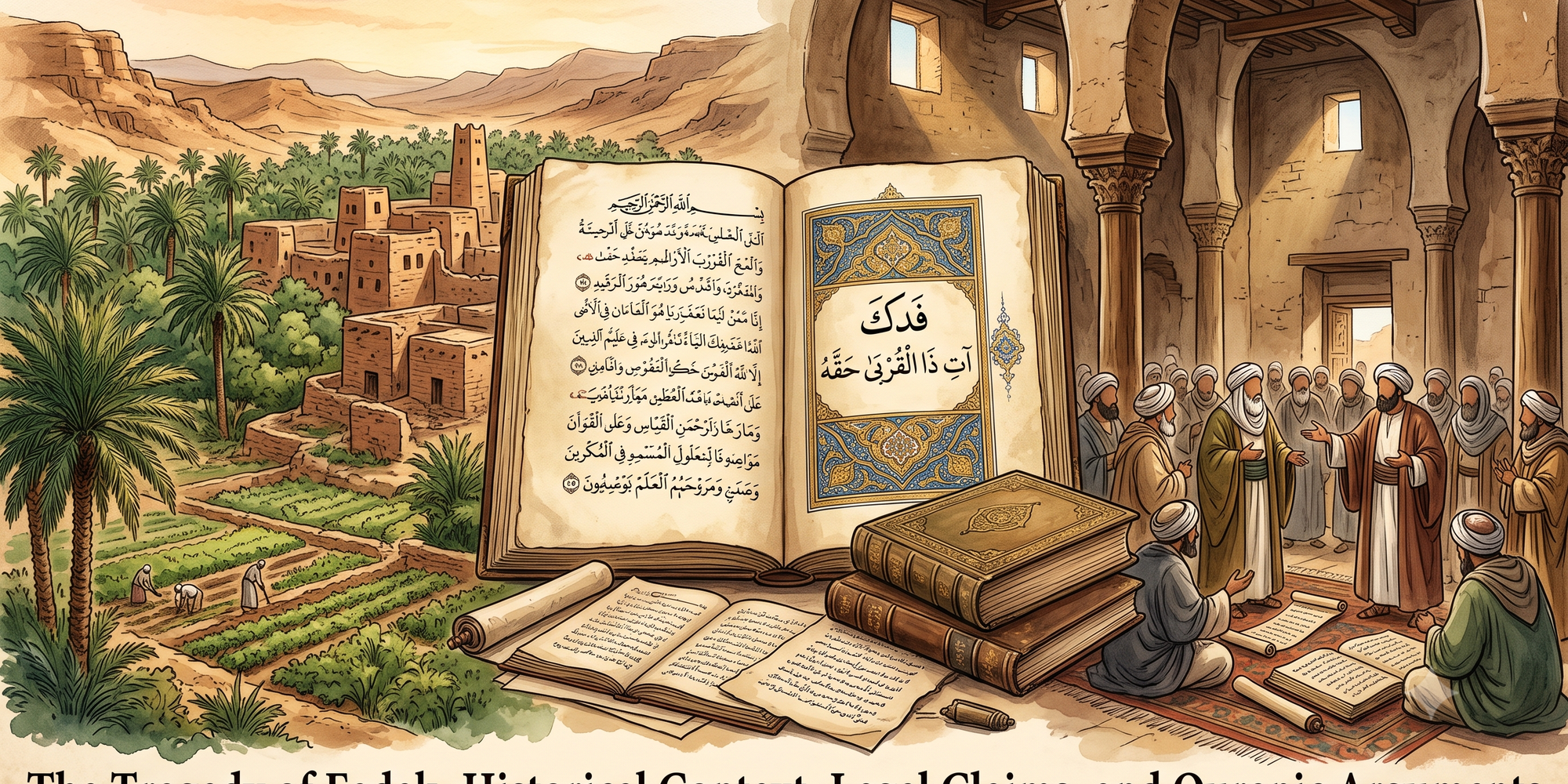
Was Fadak merely an ordinary garden? How did it become the property of Lady Fatima al-Zahra?
First, Fadak was no ordinary garden. It was a tract of land situated two or three days’ journey from Medina, with most of its income coming from dates. Its annual revenue was 24,000 dinars, or, according to another account, 70,000 dinars. Each dinar was equivalent to one mithqal of gold.
How, then, did Fadak become the property of Lady Fatima al-Zahra (peace be upon her)?
After the conquest of Khaybar—which was won by the Commander of the Faithful, Imam Ali (peace be upon him)—a substantial amount of booty was obtained and distributed among the Muslims. The Jewish inhabitants of Fadak were deeply impressed by the conquest of Khaybar and realised that they could not withstand the Muslim army. They therefore considered it safer to make peace with the Prophet of Islam.
Under the terms of the agreement, if a Jewish inhabitant of Fadak embraced Islam, they would be granted protection in exchange for giving up one-third of their property. If they did not embrace Islam, their property would pass into the possession of the Messenger of Allah. In this way, Fadak came under the ownership of the Messenger of Allah. The Quran explains the status of such property in Surah al-Hashr:
مَّا أَفَاءَ اللَّهُ عَلَىٰ رَسُولِهِ مِنْ أَهْلِ الْقُرَىٰ فَلِلَّهِ وَلِلرَّسُولِ وَلِذِي الْقُرْبَىٰ وَالْيَتَامَىٰ وَالْمَسَاكِينِ وَابْنِ السَّبِيلِ كَيْ لَا يَكُونَ دُولَةً بَيْنَ الْأَغْنِيَاءِ مِنكُمْ ۚ وَمَا آتَاكُمُ الرَّسُولُ فَخُذُوهُ وَمَا نَهَاكُمْ عَنْهُ فَانتَهُوا ۚ وَاتَّقُوا اللَّهَ ۖ إِنَّ اللَّهَ شَدِيدُ الْعِقَابِ
“Whatever Allah has bestowed upon His Messenger from the people of the towns belongs to Allah, the Messenger, the near relatives, the orphans, the needy, and the traveller, so that wealth does not circulate only among the rich among you. Whatever the Messenger gives you, take it; and whatever he forbids you, refrain from it. And fear Allah. Surely, Allah is severe in punishment.”
Surah al-Hashr, 59:7
Property obtained by the Messenger of Allah without fighting belonged to him and was not to be distributed among the Muslims as ordinary war booty. The Prophet of Islam therefore took Fadak into his possession. Numerous Sunni historians have recorded this account in their works.
Al-Tabari refers to it in his Tarikh, as does Ibn al-Athir in Al-Kamil. Historians also record that the Messenger of Allah gifted Fadak to Lady Fatima al-Zahra during his lifetime.
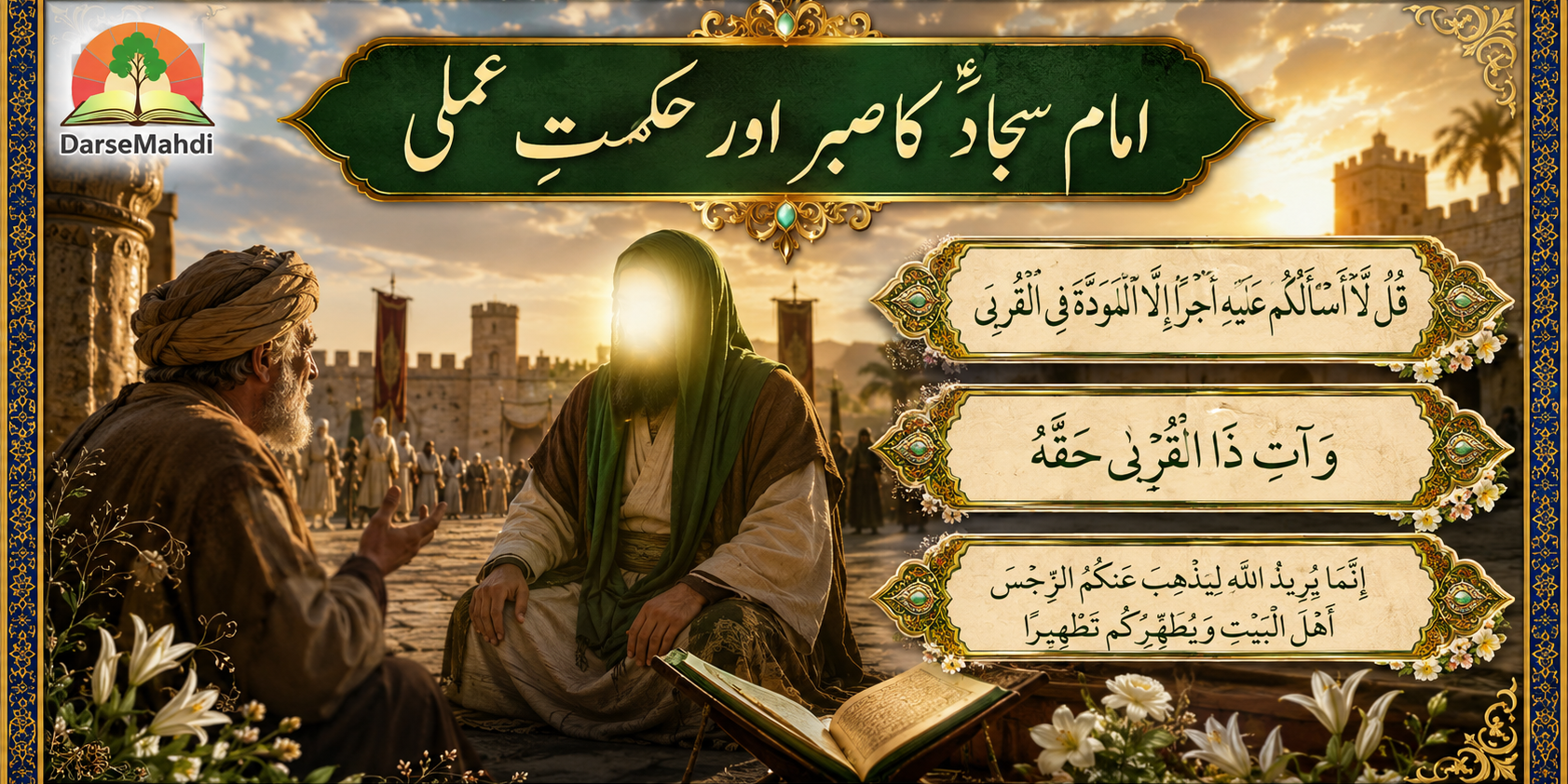
Jalal al-Din al-Suyuti, the renowned Sunni Quranic commentator, also records this gift in his Tafsir al-Durr al-Manthur under the discussion of verse 26 of Surah al-Isra, in which Allah commands that relatives be given their due. He transmits a narration from Abu Sa'id al-Khudri stating that, when this verse was revealed, the Messenger of Allah called Lady Fatima al-Zahra and handed Fadak over to her.
References from Shia Sources
1. Majma al-Bayan — original Arabic text
لَمَّا نَزَلَتْ (وَآتِ ذَا الْقُرْبَىٰ حَقَّهُ) دَعَا رَسُولُ اللَّهِ صَلَّى اللَّهُ عَلَيْهِ وَآلِهِ وَسَلَّمَ فَاطِمَةَ فَأَعْطَاهَا فَدَكاً
“When the verse ‘Give the near relative his due’ was revealed, the Messenger of Allah called Fatima and gave Fadak to her.”
2. Al-Kafi — narration attributed to Imam Ja'far al-Sadiq (peace be upon him)
Imam Ja'far al-Sadiq (AS) relates that Fadak was the exclusive property of the Messenger of Allah, belonging to the category of anfal. When the verse was revealed, the Prophet, in obedience to Allah’s command, gifted the ownership and income of Fadak to Lady Fatima al-Zahra (SA).
Further References from Sunni Sources
- ** Tafsir al-Durr al-Manthur — Allama al-Suyuti:** In volume 5, page 273, the renowned Sunni scholar Imam Jalal al-Din al-Suyuti cites a narration from the Prophet’s Companion Abu Sa'id al-Khudri. According to this narration, when the verse “وَآتِ ذَا الْقُرْبَىٰ حَقَّهُ” (“Give the near relative his due”) was revealed, the Prophet called Lady Fatima al-Zahra and entrusted Fadak to her.
- ** Dala'il al-Nubuwwah — Imam al-Bayhaqi:** Volume 6, page 320, records the historical background of this event. The account describes how, following divine instruction, the Messenger of Allah set aside the income and administration of Fadak specifically for Lady Fatima during his lifetime.
- ** Shawahid al-Tanzil — al-Hakim al-Haskani:** Volume 1, page 438, discusses the interpretation of this verse. The term “ذِي الْقُرْبَىٰ” (“the near relatives”) in the Quran refers specifically to the Ahl al-Bayt of the Messenger of Allah, supporting Lady Fatima’s claim to this right.
General works also relate that, when the verse commanding that relatives be given their due was revealed, the Prophet asked the Angel Gabriel who the near relatives were and what their right was. Gabriel replied that Allah had identified Lady Fatima al-Zahra as the intended near relative and that Fadak was her right.
Thus, the garden of Fadak came into Lady Fatima’s possession and remained under her control for approximately three years. She used its income to help the poor and needy. She cared more for the needs of others than for her own. Her spirit of selflessness was such that she would give food to orphans, the needy, and captives even when she herself went hungry. The Quran celebrates their generosity and selflessness.
Now, people of conscience, look at this matter with the eyes of justice and consider: a property that remained in Lady Fatima al-Zahra’s possession for three years during the lifetime of the Messenger of Allah was taken away from his daughter just days after his passing. When Lady Fatima (SA) asked for her property to be returned, she was treated as though she were—God forbid—untruthful, and calamities were heaped upon her.
“Those who do wrong will soon know the fate into which they will be turned.”