The Awakener of the Revolution, Yet Not Its Final Measure


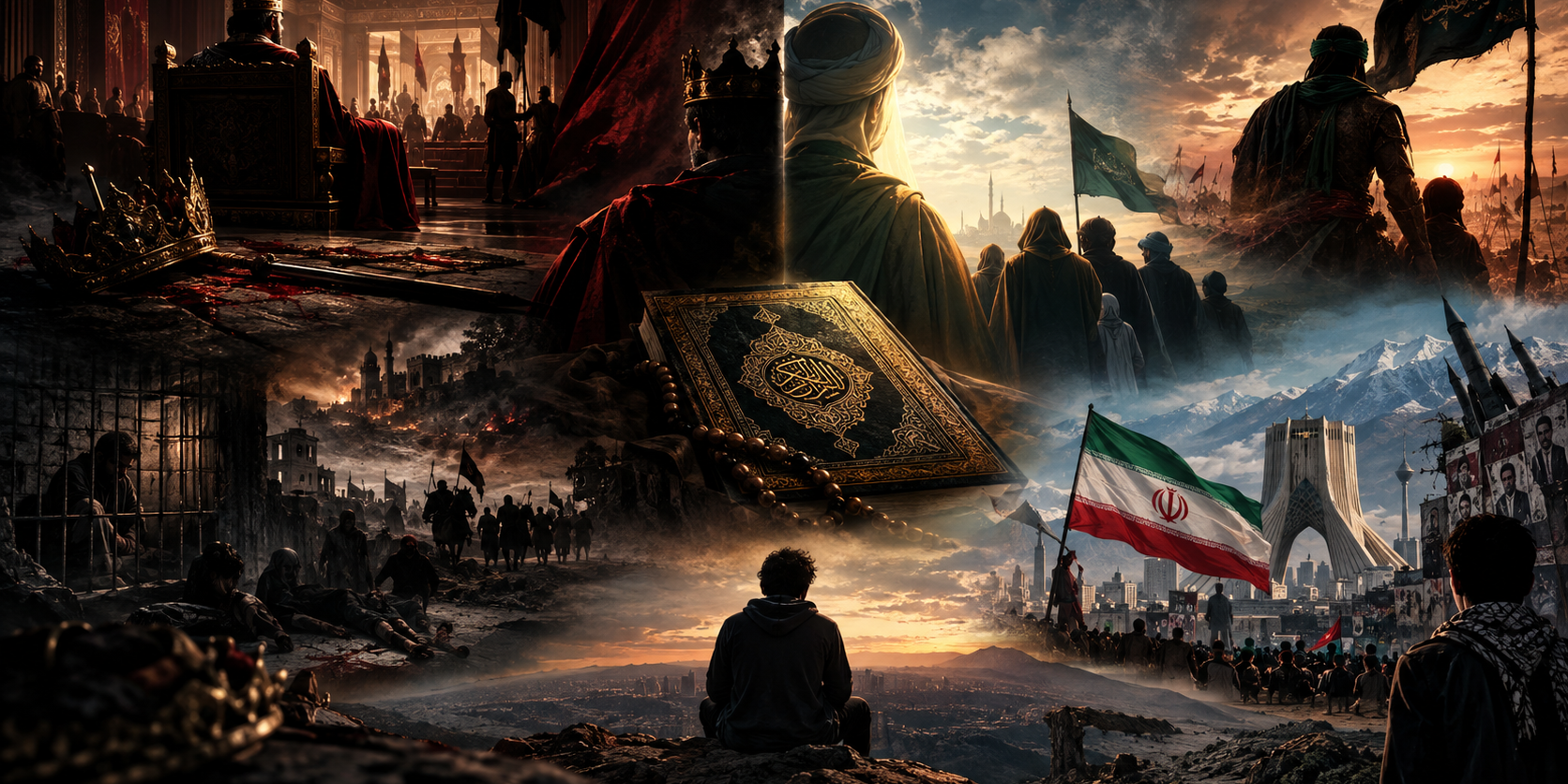
Throughout history, certain individuals do not bring about revolutions themselves, but they prepare the collective consciousness for them. Some do not lead on the battlefield, yet they teach the generation stepping onto that battlefield how to question. And some never attain political power, yet they ignite a profound awareness against tyranny.
Dr. Ali Shariati belonged to this rare caliber of individuals.
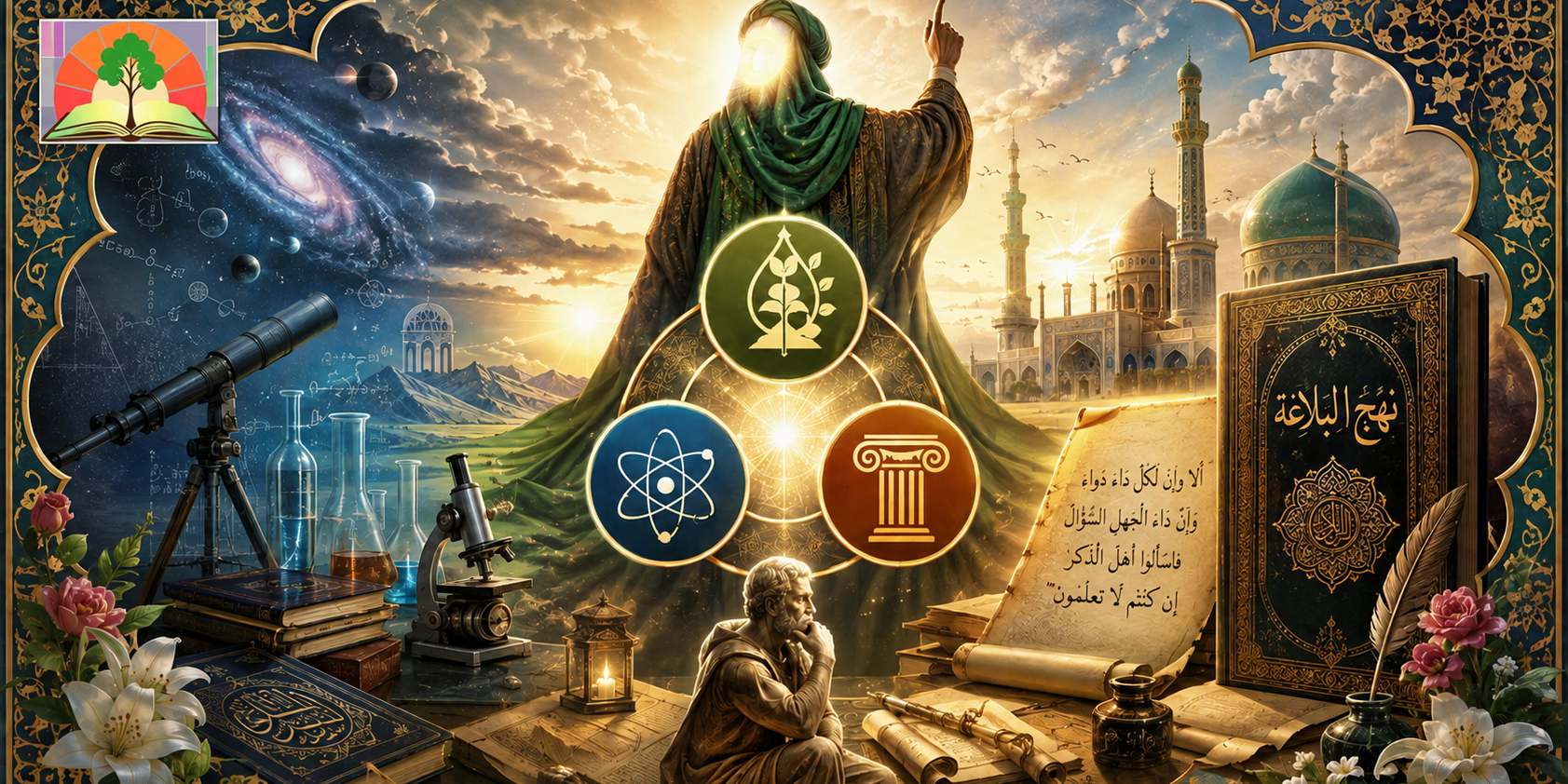
He was not a traditional cleric, nor was he an alumnus of the conventional seminary (hawza) system. Yet, he spoke the language of faith to a generation searching for its identity amidst modern education, Western thought, socialism, Marxism, and cultural alienation. He demonstrated to the young Iranian that Islam is not merely a memory of the past, but an active force of the present and a blueprint for building the future.
This was his monumental historical contribution.
To understand Shariati, one must neither deify him as infallible nor dismiss him as a misguided thinker. Intellectual integrity demands recognizing his strengths as strengths, his shortcomings as shortcomings, and evaluating his role in the revolution within its genuine historical context.
An Extraordinary Mind
Ali Shariati was born in 1933 in Mazinan, Razavi Khorasan. His father, Mohammad-Taqi Shariati, was an erudite scholar and orator. While he received a religious upbringing at home, his intellectual development was not confined to seminary walls.
He pursued modern higher education, studied sociology, traveled to France, absorbed Western philosophy and political thought, and witnessed European intellectual movements firsthand.
From this emerged a distinctive intellectual synthesis:
- The spiritual and religious heritage of the East
- The critical inquiry and dialectics of the West
- Resistance against imperialism and colonialism
- An uncompromising demand for social justice
- A passionate drive to awaken the younger generation
He refused to view Islam merely as an assortment of private beliefs and ritualistic acts. To him, a primary purpose of faith was to liberate human beings from oppression, despotism, exploitation, and stagnation. Consequently, through his words, Islam re-emerged as a vibrant, living force.
Hosseiniyeh Ershad and a New Vocabulary
By the late 1960s, Hosseiniyeh Ershad in Tehran became the epicenter of his intellectual influence. Educated youth gathered in vast numbers to attend his lectures.
He did not adopt the traditional rhetoric of the clerical pulpit. Instead, he engaged modern minds in a contemporary idiom:
- To students of sociology, he spoke in sociological frameworks.
- To students of philosophy, he spoke through philosophical dialectics.
- To restless youth, he spoke the language of rebellion, liberty, and identity.
He transformed Karbala from a passive historical tragedy into an active symbol of resistance against tyranny. He framed Imam Ali (a.s.) not solely as a sanctified figure, but as an enduring metaphor for social justice. He presented Abu Dharr al-Ghifari not merely as a companion of the Prophet, but as an emblem of protest against systemic class exploitation. Most crucially, he articulated Imam Hussain (a.s.) not just as a martyr of antiquity, but as the voice of every oppressed soul across time.
This was the juncture where Shariati's pen captured the conscience of the youth. His key concepts—most notably "Red Shi'ism vs. Black Shi'ism" (Tashayyu'-e Alavi vs. Tashayyu'-e Safavi), "Return to the Self" (Bazgasht beh Khishtan), and "Revolutionary Faith"—deeply influenced an entire generation that would later drive the 1979 Revolution.
Red Shi'ism: Potency and Peril
A central pillar of Shariati's thesis was that Shi'ism must not remain trapped in mere rituals and historical nostalgia; it had to function as an active vehicle for justice, liberty, and defiance. Within this framework, he coined the term "Red Shi'ism." In his view, a religion indifferent to the suffering of the oppressed, silent before tyranny, and providing legitimacy to authoritarian rulers loses its very soul.
Here, Shariati's voice resonated with extraordinary power.
Yet, this was also where broad generalizations began to affect his discourse. At times, he evaluated the clerical class, jurists, and historic religious institutions through a single, broad lens. His concept of "Islam without the Clergy" (Islam-e Menhay-e Akhound) reflected this ideological tension. Modern historical analyses note that Shariati harbored deep reservations regarding the traditional clerical establishment, viewing religious intellectuals (roshanfekran) as the true catalyst for revolutionary transformation.
This raises a crucial question:
Can the spiritual, jurisprudential, and scholarly integrity of faith be preserved solely through social revolution?
This was the precise fault line where Shariati's thought diverged from the seminary tradition.
Shariati's True Strength
Shariati's greatest gift was intellectual awakening.
- He had the rare ability to shake a dormant society out of apathy.
- He could reintroduce young Muslims to their own heritage with renewed relevance.
- He cast Islam as a dynamic force standing firm against imperialism, unchecked capitalism, and political autocracy.
- He dared to ask: If Ali (a.s.) was the standard-bearer of justice, how can a society claiming to follow Ali accept tyranny?
This was no ordinary inquiry. Shariati made faith an urgent, living reality for the modern intellect.
However, ideological awakening is not synonymous with complete jurisprudential authority. Recognizing this distinction is essential to understanding Shariati's place in history.
Where the Pen Faltered
Shariati was a brilliant intellectual, an omnivorous reader, and an orator of rare charisma. However, his academic foundation lay primarily in modern sociology, philosophy, and Western political science. He was not formally trained as an exegete (mufassir), jurist (faqih), legal theorist (usuli), theologian (mutakallim), or mystic (arif).
Consequently, several of his formulations on complex theological and legal matters drew rigorous critique.
This criticism came not merely from reactionary traditionalists, but from rigorous reformist thinkers. Ayatollah Morteza Motahhari—a foremost student of Imam Khomeini and a primary intellectual architect of the revolution—held deep scholarly differences with Shariati. Motahhari identified instances of conceptual conflation, an oversimplification of the boundary between speculative philosophy and empirical sociology, and certain inexact interpretations of Islamic doctrine in Shariati's writings.
This was not personal animosity; it was a divergence between two distinct intellectual mandates:
- Shariati asked: How do we awaken the Muslim mind?
- Motahhari asked the critical next question: Once awakened, where does this mind derive its rigorous doctrine, sound epistemology, and authentic theological foundation?
Imam Khomeini: The Spiritual and Political Leadership
Historical reality must be stated clearly: the Islamic Revolution of Iran was not solely Shariati's intellectual creation.
While Shariati awakened minds, Imam Khomeini provided the movement with religious legitimacy, political direction, and an operational center. Imam Khomeini's struggle did not stem merely from modern political agitation; it was firmly rooted in decades of mastery across Islamic jurisprudence (fiqh), legal theory (usul), philosophy (hikmah), ethics (akhlaq), and mysticism (irfan). His landmark lectures in Najaf on Wilayat al-Faqih (Guardianship of the Jurist) translated Islamic political thought into a concrete, executable governing model.
The divergence is distinct:
- Shariati inquired: How can Islam be mobilized into a revolutionary consciousness?
- Imam Khomeini resolved: How must the religious, legal, and institutional leadership of an Islamic revolution be established and governed?
Equating the two figures on the same institutional plane misrepresents history.
Shahid Motahhari: Guarding the Intellectual Paradigm
If Shariati posed the provocative questions, Motahhari provided the grounded, scholarly answers.
- Where Shariati defended Islam against Western critique using impassioned, revolutionary rhetoric, Motahhari countered it with rigorous philosophy, scholastic theology, and systematic Islamic metaphysics.
- Where Shariati asserted that Islam required kinetic action, Motahhari reminded the movement that action without sound ideological grounding leads to doctrinal deviation.
For this reason, Shahid Motahhari’s influence was vital both before and after the revolution. He stood among Imam Khomeini’s foremost students whose intellectual framework was forged under the Imam’s direct pedagogical guidance.
Shariati and Motahhari should not be viewed as mutually hostile rivals; they met two distinct historical needs:
One opened the door of the modern youth’s mind; the other established the scholarly standards for what entered through that door.
Shariati Against the Pahlavi State
Shariati’s ideology posed a severe threat to the Pahlavi monarchy because he did not simply voice political dissent; he undermined the ideological legitimacy of the regime. His lectures convinced the educated youth that faith was not an opiate of passivity, but a mandate to resist despotism.
The state clamped down on Hosseiniyeh Ershad, shutting it down in 1973. Shariati was arrested and subjected to prolonged solitary confinement. Even after his release in 1975, he remained under relentless surveillance by SAVAK.
History witnessed a profound irony:
The very silence the regime attempted to impose upon him only magnified his voice across the nation.
The Final Destination: London
In 1977, Shariati left Iran for Europe. In June 1977, he died suddenly in Southampton, England, at the age of forty-four.
The official cause of death was cited as a heart attack, though suspicions of SAVAK's clandestine involvement have persisted for decades (historical caution avoids labeling it a definitive assassination in the absence of conclusive declassified evidence).
Within months of his passing, the popular uprising erupted in Iran, ultimately sweeping away the Pahlavi monarchy. While it is an exaggeration to claim that the revolution occurred solely because of Shariati, it is an equal injustice to history to deny that his ideas prepared the consciousness of an entire generation on the eve of that uprising.
A Revolution of Many Tributaries
The Iranian Revolution was not the byproduct of a single figure, a single text, or an isolated sermon. It was fed by decades of diverse undercurrents: religious revitalization, political mobilization, clerical resistance, student movements, widespread public dissent against monarchical absolutism, shifting geopolitical currents, and varied intellectual strands.
Within this landscape, Shariati holds the title of a pioneering awakener:
- Dr. Ali Shariati proved to the youth that Islam speaks directly to modern political struggles.
- Imam Khomeini channeled this awakening into institutional leadership, legal legitimacy, and decisive political strategy.
- Shahid Motahhari fortified the movement's intellectual and theological foundations against modern philosophical challenges.
- The Iranian people took these converging streams and wrote history in the streets.
Neither Idolize Nor Erase
Two intellectual extremes dominate discussions surrounding Shariati:
- Those who elevate him as the sole architect of the Islamic Revolution and the ultimate authority on modern Islamic doctrine.
- Those who weaponize his intellectual missteps and theoretical overreaches to dismiss his entire life's work.
Neither approach represents fair scholarship.
Shariati raised a necessary voice against reducing faith to dynastic privilege, class monopoly, or empty ritualism. His critique sought to rescue the vital spirit of religion from stagnation and self-serving quietism. However, his rhetoric occasionally drifted into sweeping generalizations, casting suspicion too broadly across the entire clerical tradition. His critiques must be understood within their historical, reformist context, rather than accepted as an absolute indictment of the classical scholarly establishment.
Shariati must be engaged critically—recognizing both his brilliance and his limitations:
- One can draw inspiration from his capacity to awaken conscience, but one cannot derive formal creed (aqeedah) or legal rulings from his every formulation.
- One can benefit from his sharp sociological insights, but for definitive understanding of Islamic sciences, recourse to the Qur'an, the Sunnah, the Ahl al-Bayt (a.s.), and the authentic scholarly tradition remains indispensable.
This is precisely where Shariati's role reaches its natural boundary, and where the enduring scholarly legacy of Imam Khomeini and Shahid Motahhari fills the void.
Historical Legacy
Ali Shariati’s greatness does not lie in having been correct on every theological or historical issue. His true greatness lies in the courage with which he confronted the young Muslim in an era of cultural despair with a foundational question:
"Why are you a Muslim?"
- He rescued faith from passive inheritance and made it a conscious conviction.
- He extracted Karbala from mere historical mourning and turned it into an active question of moral conscience.
- He presented Imam Ali (a.s.) not solely as an object of veneration, but as an active standard of socio-economic justice.
- He portrayed Abu Dharr not just as a figure of antiquity, but as a timeless symbol of resistance against systemic tyranny.
- Above all, he proved to a generation that being a Muslim did not mean choosing between blind Western mimicry or rigid, stagnant traditionalism; it was possible to confront the modern world standing firmly upon one's own cultural and spiritual identity.
This remains his enduring triumph. Yet, to mistake this achievement for a complete, self-contained religious framework does a disservice to both the faith and to Shariati himself.
Shariati was the awakener of the revolution, Imam Khomeini was its supreme leader, and Shahid Motahhari was its primary intellectual guardian.
- Shariati lit the spark in young minds.
- Imam Khomeini directed that energy toward political and structural transformation.
- Motahhari provided that fire with intellectual coherence and doctrinal stability.
Historical justice demands that Shariati neither be substituted for Imam Khomeini, equated with Shahid Motahhari, nor expunged from the history of Islamic revival. He was an extraordinary mind, a restless spirit, an awakening pen, and a formidable revolutionary thinker. Yet, not every brilliant intellectual is an imam in every discipline.
Perhaps Shariati’s greatest legacy remains this: he compelled an entire generation to think. And in history, a well-posed question often outlives an entire revolution.